Hot tub folliculitis: causes, symptom timeline, prevention, water chemistry checks, risk factors, and when to see a doctor.
Final Quote
Quick answer: Hot tub folliculitis is a rash caused by Pseudomonas aeruginosa bacteria in poorly disinfected warm water. Bumps usually appear within a few days, clear up in 7 to 14 days on their own, and are prevented by keeping chlorine, bromine, and pH in range.
Best for
Owners or guests with a rash after soaking who want to know what it is, how long it lasts, and what to fix in the water.
Wrong fit
Diagnosis or treatment advice. See a clinician for anything that does not match this pattern.
Tradeoff
Clear-looking water is not proof that sanitizer and pH are actually in range.
The short answer: Hot tub folliculitis is a rash caused by Pseudomonas aeruginosa bacteria in poorly disinfected warm water. Bumps usually appear within a few days, clear up in 7 to 14 days on their own, and are prevented by keeping chlorine, bromine, and pH in range.
What Causes It
Hot tub folliculitis (also called hot tub rash or Pseudomonas folliculitis) is an infection of hair follicles caused by Pseudomonas aeruginosa, a bacterium that survives in warm water better than chlorine-sensitive germs and multiplies when disinfectant or pH drift out of range. It most often shows up under a swimsuit, because wet fabric holds contaminated water against the skin longer than bare skin sheds it.
It is not the only waterborne risk tied to bad hot tub maintenance. Legionella is a separate concern that comes from the same root cause: water that is not kept disinfected, filtered, and circulated.
Timeline: Exposure to Recovery
Stage
Typical timing
What it looks like
Source
Exposure
At the time of soaking
Contact with warm water where disinfectant or pH has drifted out of range
CDC, Wisconsin DHS
First symptoms
Sources disagree: as early as 6-48 hours per the peer-reviewed literature, or 1-3 days per CDC's own consumer fact sheet
Itchy, red bumps around hair follicles, often concentrated where a swimsuit held water against the skin
CDC fact sheet (2020); NIH/PMC review (2020)
Peak rash
First few days after onset
Bumps can turn into small pus-filled pustules; some people also get headache, sore throat, fatigue, or a mild fever
Cleveland Clinic (2022); NIH/PMC review (2020)
Resolution
7 to 10 days, up to about 2 weeks
Rash fades on its own in most healthy adults, usually without scarring
Still present past 2 weeks, spreading, or with fever
Any time
Time to see a clinician rather than wait it out
CDC fact sheet (2020); Cleveland Clinic (2022)
The gap between the 6-48 hour window in the peer-reviewed literature and the 1-3 day window in CDC's own consumer material is not resolved anywhere in the sourced record; both are published and current, so both are stated here rather than picking one.
Water Chemistry That Prevents It
The same disinfectant and pH ranges CDC publishes for recreational water keep P. aeruginosa from multiplying in a private hot tub. These are CDC's published targets, not a figure this site derived:
What to test
Target range
Source
Free chlorine
At least 3 ppm; tell whoever maintains the tub if a reading goes above 10 ppm
CDC, updated 2025-05-30
Bromine
4-8 ppm
CDC, dated 2025-05-20
pH
7.0-7.8
CDC, dated 2025-05-20
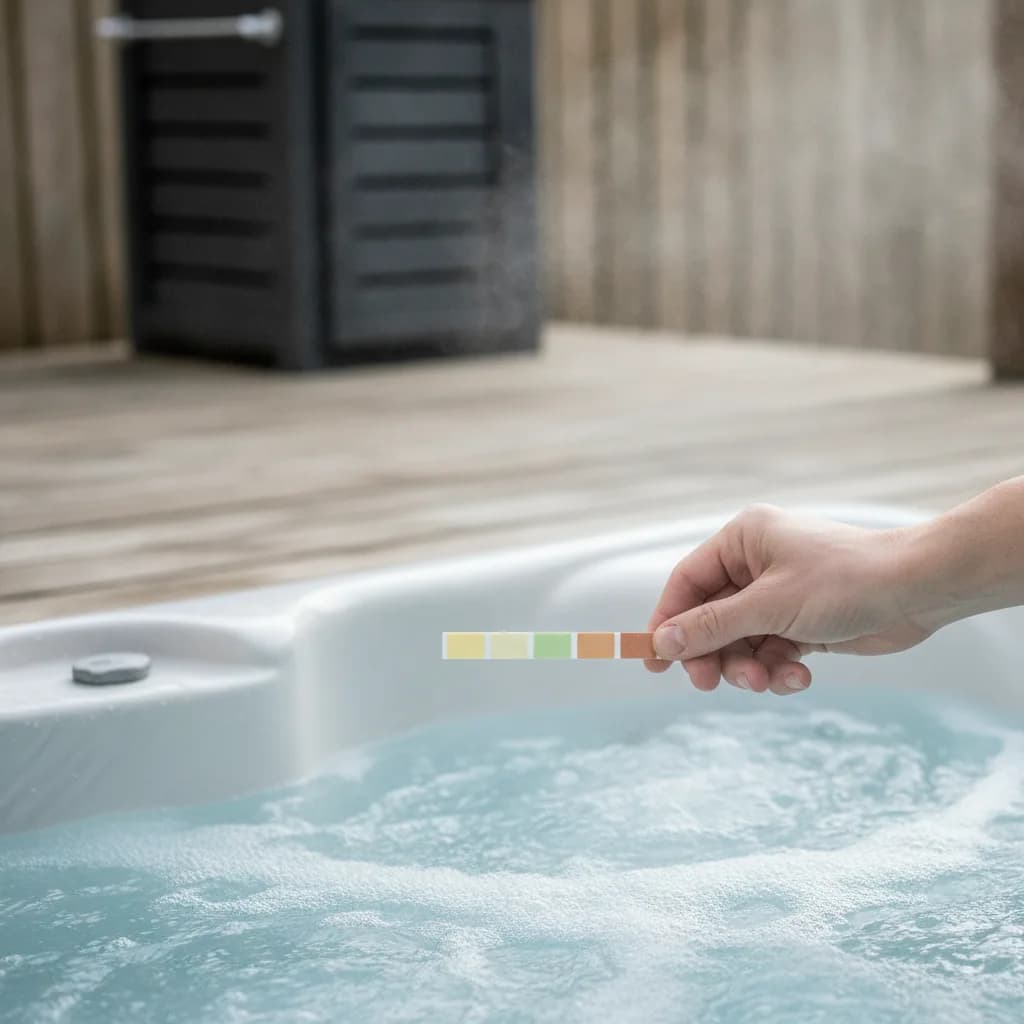
Testing strips and drop tests check these three numbers in under a minute; the hot tub test kit guide compares the two methods. If you are deciding between a chlorine, bromine, or salt system in the first place, salt water vs chlorine vs bromine covers the tradeoff; every system still has to land in the ranges above. The water chemistry guide covers the rest of the balance (alkalinity, calcium hardness) that keeps sanitizer working instead of getting consumed.
Who Is More at Risk
Sourced to a 2020 peer-reviewed case report and review of host risk factors (NIH/PMC), with one point independently corroborated by Cleveland Clinic:
Longer time in the water shows the strongest association with infection in the reviewed literature: extended submersion softens the skin's outer barrier, making bacterial entry easier.
Women and girls show higher prevalence in outbreak data, a finding reported independently by both the PMC review and Cleveland Clinic.
Diabetes, immunosuppression (from illness or medication), and chronic tetracycline use are each named in the PMC review as factors that reduce the skin's normal bacterial defenses. This point is sourced only to that one review, not independently corroborated elsewhere.
Skin trauma, including sunburn or other thermal burns, gives bacteria an easier way in.
Prevention Checklist
Test chlorine or bromine and pH before getting in, not after. Clear water is not proof the chemistry is right.
Shower before and after soaking.
Do not sit in a wet swimsuit after you get out; remove it and wash it before the next use.
Rinse or clean filters on schedule. A clogged filter cuts circulation, and poor circulation lets disinfectant levels drift unevenly around the tub, a connection covered in the filter cleaner guide.
If the water is cloudy, foamy, or smells off, stay out and test it first. When not to use a hot tub covers the other situations worth skipping a soak over.
Editorial recommendation, not a formal health-agency instruction: if someone in the household develops this rash after using the tub, treat it as a signal to drain, clean, refill, and retest the water before anyone else gets in, rather than assuming the next soak will be fine.
When to See a Doctor
See a clinician for fever, nausea, or vomiting alongside the rash, for a rash that spreads or does not improve after about 2 weeks, or if you are immunocompromised. Most cases clear up without antibiotics; when treatment is needed, the peer-reviewed literature names oral ciprofloxacin as the typical first-line choice, guided by a culture rather than guessed at. This is general sourced information, not a prescription recommendation for any individual case.
Clinical and state health sources frame outbreaks as a shared-exposure problem, not person-to-person spread: everyone who soaked in the same under-disinfected water is at risk, the way a foodborne outbreak traces to one meal rather than spreading person to person.
How long does hot tub rash last?
About 7 to 10 days, and up to roughly 2 weeks in some cases, based on CDC, Cleveland Clinic, and peer-reviewed sources that all converge on the same range.
Do I need antibiotics for hot tub folliculitis?
Usually not. Most cases clear up on their own. Antibiotics, typically oral ciprofloxacin guided by a culture, are reserved for cases with fever or other systemic symptoms, cases that do not improve, or people who are immunocompromised.
Can a clean-looking hot tub still cause this rash?
Yes. Clear water is not proof that chlorine or bromine and pH are in range. Test before trusting it.
Checked 2026-10-15. What this page could not verify: the exact onset window, where CDC's own consumer material and the peer-reviewed literature disagree; and how current the often-cited "67% of hot tubs, 63% of pools" contamination estimate is, since it traces to one peer-reviewed source rather than an ongoing national survey, which is why that figure is not repeated here as a standalone claim.
Methodology
These guides are built from manufacturer documentation, public specifications, primary research where health claims matter, and repeated buyer questions that show up in real ownership and installation decisions.
Manufacturer and dealer sources can clarify pricing bands, warranty terms, support footprint, or common mistakes. They do not move a page up the shortlist on their own.
Health and safety pages are written conservatively. When the safer answer is to slow down, get clearance, or skip the heat, that is the answer we give.
Written by Hot Tubs Guide Editorial TeamReviewed by Hot Tubs Guide Editorial Team, Independent hot tub buyer research on October 15, 2026How we reviewEditorial policy
Next Step
What to do next
Use one of these three paths. They are here to move the decision forward, not add more noise.