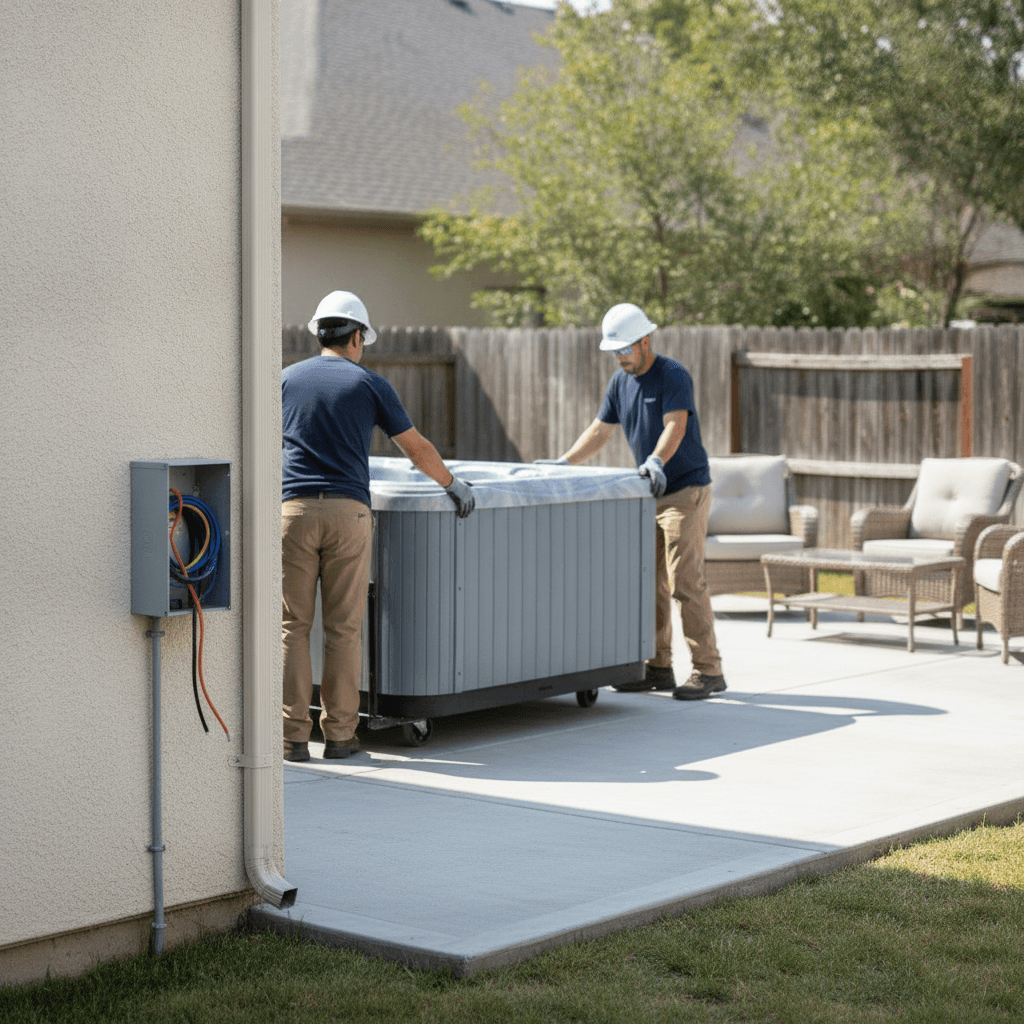
A priced, line-by-line delivered-cost table for a rotomolded, a mid-tier dealer acrylic, and a premium dealer acrylic hot tub: tax, electrical, pad, crane, permit, and accessories.
Real Budget
Quick answer: A $2,999.99-$4,999.99 rotomolded plug-and-play tub typically lands at $3,210-$7,100 delivered and installed. A $12,999 mid-tier dealer acrylic tub typically lands at $14,780-$21,150. A $27,999 premium dealer acrylic tub typically lands at $29,780-$37,650. The gap over sticker price is electrical work, a pad, permits, sales tax, and startup chemicals, before a single accessory or a crane is added.
Best for
Buyers trying to set a real all-in budget before visiting a dealer.
Wrong fit
Someone looking only for a tub's sticker price or MSRP.
Tradeoff
A rotomolded tub adds a few hundred dollars beyond sticker; a dealer acrylic tub can add $2,000-$10,000 beyond sticker before a single accessory is chosen.
A $12,999 hot tub is not a $12,999 project. By the time electrical work, a pad, a permit, sales tax, and a startup chemical kit are added, the same tub commonly lands between $14,780 and $21,150 delivered and running, before a crane, a cover, steps, or a cover lifter are chosen. This page prices every line separately, for three real current products, so the gap between showroom number and real number is visible before a deposit changes hands.
Quick Answer
Project
Sticker price
Delivered and installed, required lines only
Rotomolded plug-and-play (Lifesmart LS200)
$2,999.99-$4,999.99
$3,210-$7,100
Mid-tier dealer acrylic (Hot Spring Hot Spot Rhythm)
$12,999
$14,780-$21,150
Premium dealer acrylic (Hot Spring Prism)
$27,999
$29,780-$37,650
"Required lines only" means sales tax, freight or delivery, a pad or deck check, electrical work, a permit where one applies, and a startup chemical kit. It excludes a crane (situational), a cover if one is not included, a cover lifter, steps, and old-tub removal, all priced separately below because they depend on your yard and your existing tub, not on the model you buy.
The Delivered-Cost Table
Checked September 17, 2026 against the sources listed below. Each line carries its own evidence type because no single dealer, manufacturer, or aggregator publishes a bundled all-in number: that number only exists once you add these lines yourself.
dropcurb.com Hot Tub Removal Cost, published March 13, 2026; corroborated by Angi's published $400 national average
Add the required lines to the tub price for the Quick Answer totals above. Add a crane only if your access path genuinely needs one. Add cover, lifter, steps, and old-tub removal only if they apply to your project. With every optional line included at the high end, the rotomolded project can reach about $9,350, the mid-tier acrylic project about $25,900, and the premium acrylic project about $42,400.
What Drives Each Line
Electrical. Nearly every dealer acrylic tub needs a dedicated 230-240V circuit with GFCI protection, run by a licensed electrician. A rotomolded plug-and-play tub usually ships on a standard 110-120V connection, so it only needs a dedicated GFCI outlet, not a full circuit. Distance from the panel and whether a subpanel is needed move this line the most. Hot tub electrical disconnect has the full quote checklist for this scope, and plug-and-play vs 220V hot tubs covers what the extra voltage buys in return.
Pad. A filled hot tub commonly weighs 3,000-5,000 lbs. Most dealer acrylic tubs need a reinforced concrete pad sized to the footprint; a lighter rotomolded tub often qualifies for an existing patio or deck after a basic point-load check. Hot tub delivery and site prep covers how to confirm your surface either way, and acrylic vs rotomolded hot tub shows why the weight gap exists.
Crane or difficult access. A crane is not automatic. It becomes necessary when the tub cannot pass through a gate, over a fence, or around a tight side yard using a standard spa dolly. Ask for a site survey before assuming either way.
Permit. Requirements vary by city and county. A new dedicated circuit is the line most likely to trigger a permit and inspection; a simple existing outlet often does not.
Sales tax. Five states charge no state sales tax; combined state and local rates elsewhere run from low single digits past 10%. Check your own rate before comparing an out-the-door total between two dealers in different jurisdictions.
Accessories. A cover, a cover lifter, and steps are frequently bundled into a dealer's "delivery package," which can make two otherwise-identical quotes look farther apart than they are. Use the hot tub quote checklist to confirm exactly what is and is not included before comparing two out-the-door prices, and the accessory shortlist to decide what you actually need versus what a dealer is upselling.
Ongoing Costs Are a Separate Question
Everything above is a one-time, delivered-and-running cost. It does not include electricity, water care, filters, or the eventual cover replacement, which recur every month and every year of ownership. Hot tub monthly cost prices those by climate, lane, and sanitizer system, with worked annual and 10-year totals. Acrylic vs rotomolded hot tub carries a full purchase-through-10-year total for four named products if you want the two pages combined into one number.
Methodology
Checked September 17, 2026. Tub prices are carried over from this site's own already-verified research: the Lifesmart LS200 retail listing and the Hot Spring Hot Spot Rhythm MSRP from acrylic vs rotomolded hot tub (checked 2026-09-03), and the Hot Spring Prism MSRP from caldera vs hot spring (checked 2026-08-16). Electrical and pad ranges match the figures already published on those two pages so the site does not carry two different numbers for the same line; both are corroborated here against two additional independent sources, Jacuzzi's own installation-cost page and onehottub.com's September 2026 update, rather than resting on a single source. Startup-chemical, old-tub-removal, and sales-tax figures are new to this page and sourced as shown in the table.
What We Could Not Verify
No dealer, manufacturer, or cost aggregator publishes one bundled all-in delivered price. Every total on this page is built from separately sourced lines, not a real invoice.
Whether a specific rotomolded retailer's sticker price includes delivery varies by seller and by promotion; confirm it on your own order before assuming it is included.
What share of dealer acrylic installs actually require a crane. No source quantifies this nationally; it depends entirely on the individual property.
The exact sales tax treatment of installation labor versus the tub itself, which some states tax differently. Confirm the taxable base with your dealer's invoice, not this page.
How much should I budget beyond the sticker price?
For a rotomolded plug-and-play tub, budget roughly $210-$2,100 beyond the sticker price for tax, electrical, pad, permit, and startup chemicals. For a dealer acrylic tub, budget roughly $1,780-$9,650 beyond the sticker price for the same required lines, before any crane or accessories. See the delivered-cost table above for the exact lines.
Does a hot tub need a permit?
Often, if a new dedicated electrical circuit is being installed. Requirements and fees vary by city and county, and typically run $100-$500 where one is required. A simple existing outlet is less likely to need one.
Do I need a crane to install a hot tub?
Only if your access path, a gate, a fence, a slope, or a tight side yard prevents a standard spa dolly delivery. Ask for a site survey before assuming a crane is or is not needed, since it is the single largest line this page cannot predict for your property.
What if I'm replacing an old hot tub?
Budget $200-$600 for professional removal and haul-away, averaging around $400, unless your dealer offers a haul-away credit toward the new tub.
Is sales tax included in the price a dealer quotes?
Not always. Confirm whether the quoted number is before or after tax, and at what rate, since combined state and local sales tax rates range from 0% in five states to over 10% in others.
These guides are built from manufacturer documentation, public specifications, primary research where health claims matter, and repeated buyer questions that show up in real ownership and installation decisions.
Manufacturer and dealer sources can clarify pricing bands, warranty terms, support footprint, or common mistakes. They do not move a page up the shortlist on their own.